
Five Pitfalls to Avoid When Launching a Cannabis Pre-Roll Brand in 2026
Pre-rolls are now the fastest-growing category in cannabis — and the easiest one to get wrong. Five operational and financial mistakes that quietly sink new pre-roll brands, with 2026 market data and what to do instead.
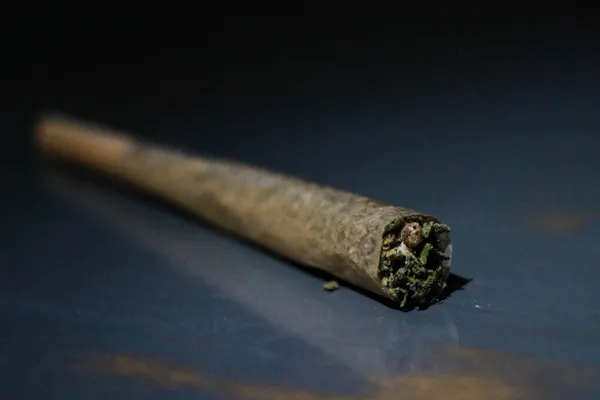
The Pre-Roll Window Is Open — But It's Narrowing
If you've been waiting for the right moment to launch a pre-roll brand, the data says that moment is now. According to Headset point-of-sale data through June 2026, pre-rolls are the fastest-growing major category in U.S. cannabis, up 10.1% year over year to $3.84 billion across the 16 markets Headset tracks. Pre-roll revenue grew roughly 110% from 2021 to 2025 — from $1.7 billion to $3.6 billion — while flower actually declined $30 million in the same window. In 2025, pre-rolls officially overtook flower as the most-sold product category in the United States by unit volume.
But that growth is a double-edged sword. A rising tide lifts every boat, including the leaky ones. The same momentum pulling new brands into the category is also pulling in undercapitalized operators, single-format producers, and brands that cut corners on density and consistency. The shelf is getting crowded, the consumer is getting discerning, and the margin for error is getting thin. The brands that survive the next 24 months won't be the ones with the best packaging — they'll be the ones that built production discipline in from day one.
What follows are the five pitfalls we see sink new pre-roll brands most often in 2026 — backed by current market data and the operational reality of running a line that has to ship consistent product shift after shift.
Pitfall 1: Treating Density Consistency as a Packaging Problem
The single fastest way to lose a repeat customer is a pre-roll that canoes, runs, or won't stay lit. And here's the uncomfortable truth most new operators learn too late: a joint can look perfectly straight, weigh correctly, and pass a visual QA check — then fail the moment the consumer lights it. As Cannabis Industry Journal put it in their manufacturing analysis, "A pre-roll can look consistent and still perform inconsistently. Appearance alone is not enough." Canoeing almost always traces back to uneven fill density: one side packed looser than the other, inconsistent grind distribution, or moisture variance that changes how the cherry travels.
This matters more in 2026 than it did three years ago because the consumer pool has changed. Headset's loyalty data shows the average pre-roll brand retains only 30.6% of its category customers — the lowest retention of any major cannabis category (beverage brands, by contrast, keep 61.1%). Top-quartile pre-roll brands retain 43.6% or more. The gap between a brand that survives and one that churns is built almost entirely on consistency: uniform density, even airflow, and a burn rate that doesn't change from joint to joint in the same pack.
The fix isn't better inspection — it's better packing. Controlled, repeatable fill density at the machine level eliminates the variance before it ever reaches a QA station. Multi-frequency vibration packing, where the fill is settled under tuned frequencies rather than tamped by hand or by a single blunt force, is what produces the uniform density that prevents canoeing, soft tops, and air pockets. Brands that try to hit consistency by adding more hand-labor to the back end always lose — the variance is introduced at the fill, not corrected after it.
Pitfall 2: Betting the Brand on a Single Format
The pre-roll category is no longer synonymous with "cone." Infused pre-rolls now hold roughly 43% market share within the category and account for nearly half of total pre-roll revenue — about $1.68 billion — according to Custom Cones USA's 2026 State of the Pre-Roll Market report. Multi-packs have grown from 27.7% of the market in 2018 to nearly 50% today, driven by value-conscious consumers. And format demand keeps fragmenting: straights for the cigarette-style smoker, blunts for the flavor-forward crowd, dogwalkers for the single-session convenience buyer, and infused cones for the potency seeker.
The brands posting the strongest repeat-purchase numbers in 2026 are the ones offering a full lineup from a single supplier, not the ones locked into a single cone SKU. Retailers reward breadth — a buyer who can stock cones, straights, and blunts from one vendor simplifies their purchasing, their shelf plan, and their vendor management. A brand that shows up with one format is a line item; a brand that shows up with three is a category partner.
The trap is that most equipment on the market is built around one format. You buy a cone filler, and you're a cone brand forever — until you buy a second machine to add straights or blunts. That's a second capex outlay, a second footprint on the floor, a second crew to train, and a second set of plates and tooling. The operators who avoid this pitfall choose a multi-format platform from the start: one machine, one crew, one footprint, and the ability to shift formats as the market shifts. When a regional blunt trend spikes or a retailer asks for a straight-cylinder private-label run, the brand that can pivot in an afternoon wins the order. The brand that has to quote a six-month equipment timeline loses it.
Pitfall 3: Over-Investing in Six-Figure Automation
This is the pitfall that does the most financial damage, and it's almost always driven by a well-meaning assumption: that scaling output means buying a $150K–$300K fully-automated system. New brands read the spec sheets, see the advertised throughput numbers, and assume the price is the price of entry into real volume. What the spec sheet doesn't show is the total cost of ownership — the mandatory service contract, the factory technician who has to fly in when the machine faults, the weeks of downtime while you wait for a part, and the single-format lock-in that means you've spent a quarter-million dollars on a machine that can't pivot when the market does.
The math gets worse when you compare advertised output to real, packed-and-closed output. A lot of six-figure systems advertise a headline throughput number that assumes ideal material, a dedicated operator, and no changeover. Real-world packed-and-closed output — units that are actually filled, closed, and ready to ship — is often a fraction of the advertised figure. And the service contract alone can run $15,000–$30,000 a year on top of the purchase price, every year, for the life of the machine.
The operators who avoid this pitfall run the comparison before they buy. They line up the advertised output, the real packed-and-closed output, the total cost of ownership, the crew size required, the format flexibility, and the service obligations — and they ask whether the six-figure premium actually buys them more usable output per dollar. In a lot of cases, it doesn't. A platform that delivers comparable packed-and-closed output at a fraction of the capex, with no mandatory service contract and no factory technician, frees up the capital that a new brand actually needs — for flower, for packaging, for branding, for the channel build that determines whether the product ever reaches a shelf at all.
Pitfall 4: Ignoring the Infused Pre-Roll Shift
If you launched a pre-roll brand in 2021, a clean-flower cone was a defensible flagship. In 2026, it's table stakes. Infused pre-rolls — joints boosted with kief, hash oil, distillate, or live resin — now account for more than $1.1 billion in sales so far in 2025, roughly 48.5% of all pre-roll revenue, and that share is still climbing. Custom Cones USA reports infused revenue is up 14% year over year. The consumer has voted clearly: potency and flavor intensity, delivered in a ready-to-smoke format, is what drives the repeat purchase.
The pitfall isn't ignoring infused pre-rolls entirely — most new brands know they exist. The pitfall is treating infusion as a side project you'll add later, after the core cone line is stable. By the time "later" arrives, the infused segment has moved again — into live resin infusions, into dual-infused blunts, into hash-hole and diamond formats that command premium price points. The brands that win are the ones building infusion capacity into the production plan from the start, with equipment and workflow that can handle concentrate-loaded material without sacrificing the density consistency that Pitfall 1 demands.
There's a quality dimension here too. Infused material behaves differently than clean flower — it's stickier, denser in spots, and harder to pack uniformly. A packing system that handles clean flower fine can produce canoeing and soft tops the moment you run infused material through it, because the fill dynamics change. The operators who succeed with infused pre-rolls are the ones whose packing platform was built to handle the variance — tuned vibration that settles infused material as evenly as it settles clean flower, so the potency joint burns as cleanly as the flagship cone.
Pitfall 5: Letting Labor Overhead Quietly Eat the Margin
Pre-roll margins look strong on a spreadsheet and fragile in practice, and labor is usually where they leak. The temptation for a new brand is to solve early volume with bodies — more hands on the packing table, more crew on the closing and inspection line. It feels safe because it's incremental: you add a person when you add a shift, and you avoid the big equipment purchase. But labor in cannabis is expensive, turnover is high, and every hand you add to the line is a variable cost that scales linearly with output while the price per unit keeps compressing.
The math turns negative faster than most operators expect. Headset's data shows unit sales grew 5.5% in the 12 months ending June 2026 while dollar sales grew only 0.8% — meaning shoppers bought more cannabis at lower prices. That's price compression in real time, and it's the environment every new pre-roll brand launches into. A brand running a bloated manual crew has no room to absorb that compression; a brand running a high-output platform with a lean 2–3 person crew has the margin cushion to ride it out, invest in brand, and win share while competitors are cutting corners to stay afloat.
The fix isn't automation for its own sake — it's automation that replaces the right labor at the right cost. The FlexPak Max Enterprise package includes two machines and delivers up to 49,248 packed-and-closed cones per 8-hour shift. Staffing depends on the package and production workflow. That isn't just a throughput play; it's a margin-structure play. It converts a variable, escalating labor cost into a fixed, predictable one, and it does it without the six-figure capex and service contract that Pitfall 3 warns against. That's the combination that lets a new brand hit volume on day one without mortgaging its margin to get there.
The Common Thread: Build the Line Before You Build the Brand
Every one of these five pitfalls shares a root cause: treating production as something you'll figure out after the brand launches, instead of something you engineer before it does. Density consistency, format flexibility, total cost of ownership, infused capability, and labor structure are all decisions made at the equipment stage — and they're all expensive to undo after the product is on the shelf and the reviews are coming in.
This is exactly why we built the FlexPak Max and FlexPak Edge the way we did. The Max Enterprise package includes two machines and delivers up to 49,248 packed-and-closed cones per 8-hour shift. Staffing depends on the package and production workflow. Max is a cone-focused platform with no factory technician and no mandatory service contract — giving a new brand the density consistency and lean labor structure that Pitfalls 1 and 5 demand. The Edge runs cones, straights, and blunts on a single platform, so a brand can offer the full format lineup that Pitfall 2 rewards and pivot to whatever the market is buying without a second capex outlay. Both platforms handle infused material with the same tuned vibration that handles clean flower, addressing Pitfall 4's quality challenge at the fill. And both do it at a fraction of the six-figure automation cost that Pitfall 3 turns into a margin trap — USA-built, with lifetime technical support from our Oklahoma facility rather than a recurring service contract.
If you're launching a pre-roll brand in 2026, the category growth is real and the window is open. But the brands that will still be on the shelf in 2028 are the ones that treated production discipline as the foundation, not an afterthought. Run the comparison on output, cost of ownership, format flexibility, and service obligations before you buy — and build the line that can carry the brand you're actually trying to build.
Looking to scale pre-roll production in-house?
The FlexPak Max and Edge Enterprise packages deliver up to 49,248 packed-and-closed pre-rolls per 8-hour shift. Staffing depends on the package and production workflow. USA-built, zero mandatory service contracts.
FlexPak Team
Insights and Trends in the Preroll Industry by The FlexPak Team
More Industry Insights
 Series
The Pre-Roll Automation Trap
A 10-part, real-world look at what pre-roll automation actually costs, produces and requires once it leaves the sales presentation and hits the production floor.

Puff, Puff, Profit: Why CBD Joints Are the Hottest Trend in the Market
Discover why CBD joints are the hottest trend in the pre-roll market — and how producers are scaling non-psychoactive preroll output without six-figure automation.
Top Cannabis Pre-Roll Brands: Trends, Formats & Market Insights for 2026
Explore the brands shaping the pre-roll category in 2026 — from infused cones to straights and blunts — and the format trends operators need to watch to stay competitive.
From Bud to Bank: How In-House Pre-Roll Production Elevates Cannabis Cultivation
Why cultivators are bringing pre-roll manufacturing in-house in 2026 — capturing 3–5x margins on trim and smalls, controlling quality, and turning biomass into branded revenue without six-figure automation.